
Categories
Health Regulation

What is ICH and what does the incorporation of Cofepris as a member of the ICH mean?

ICH is the International Council of Harmonization of Technical Requirements for Pharmaceuticals for Human Use (Consejo Internacional de Armonización de Requisitos Técnicos para Productos Farmacéuticos de uso Humano, in Spanish). Its purpose is to establish guides and technical and scientific guidelines that are used for the development of drug products and serve as the basis for obtaining authorizations in different countries. Ultimately, it ensures that safe, effective, and high-quality drug products are developed, registered and maintained, in the most efficient way possible while meeting high standards, in order to contribute to public health.

ICH is made up of 20 member countries and 36 observers.

Advances in the implementation of ICH guidelines in Mexico

As will be recalled, in November 2021 Cofepris announced that it was a member of ICH, which entails the implementation of approximately 70 ICH guides with the aim of their harmonization. The guides are divided into four large groups:

• Quality (Q)

• Multidisciplinary (M)

• Efficacy (E) and

• Security (S).

ICH classifies the different guidelines into three levels, with which it determines the time for the member countries to implement them.

Those of level 1 are mandatory to be a member of ICH, therefore, they must already be implemented at the time of the membership application. The guides that belong to this level are: Q1, Q7, E6; and, in general terms, they deal with drug product stability, good manufacturing practices for active pharmaceutical Ingredients,  and good clinical practices.

Those of level 2 must be implemented within a period not exceeding 5 years from the date of membership. The guides that belong to this level are: E2A, E2B, E2D, M1 and M4; the topics covered by these guidelines are clinical safety data management, the format for electronic transmission of adverse reaction reports, use of MedDRA terminology, CTD, and management of safety information.

Those of level 3, include the rest of the ICH guides, and must be implemented in the medium and long term (a specific time is not defined), which are the most specialized, such as those focused on the quality of biotechnological products, on procedures of analytical validation, pharmacokinetic and toxicokinetic studies, dose-response studies, etc.

Currently, Cofepris almost completes the implementation of the level 2 guidelines. It should be noted that the level 1 was implemented before they accepted Mexico as a member.

The Q1A, Q1B, Q1D, and Q1E guides are included in NOM-073-SSA-1-2015, Stabilities of drug substances and drug products.

The Q7 guide is included in NOM-164-SSA-1-2015, Good manufacturing practices for Active Pharmaceutical Ingredients.

The E2A, E2B, E2C, E2D, E2E, M1 guides are included in NOM-220-SSA-2016, Installation and operation of pharmacovigilance, and its corresponding modification published in 2020.

Currently, out of the level 2 guides, only the M4 guide that refers to the CTD remains pending, which is the type of dossier (product file) used in Europe for the registration of drug products, which does not contemplate two large items that Cofepris continues to request for the registration (authorization) of drug products that are: quality of excipients and manufacturing orders with the traceability of stability batches.

It is a big question how they will carry out the implementation of this guide that will definitely greatly simplify the registration of drug products in Mexico, since many products that are sold abroad comply with the CTD, but not with the additional requirements of Cofepris, so they can’t be registered in Mexico. This limits the availability in Mexico of multiple therapeutic options.

The implementation of the guides will be carried out by means of Official Mexican Standards; it should be clarified that it is not intended to carry out a transcription of the ICH guides as it is, but each country can add particularities, as long as it complies with what is established by each ICH guide.

It is very important that Cofepris continues on working with the implementation of the ICH guidelines, not only so that it remains as a member of this organization, but also so that the population in Mexico can get benefit, by speeding up the authorization of records, which results in the acceleration in access to medicines of new technologies and new therapeutic options.

In the regulatory certainty strategy published on social media and on the Cofepris website in January of this year, it is established that the M1 guidelines will be completed this year.

For the M4 guide (related to the CTD) they established its implementation in the period 2023-2026 and finally, in that same strategy it indicates that the adoption of the rest of the ICH guides (level 3) will start from the year 2027.

On this basis, we can affirm that Cofepris is complying with the times established for the adoption of the ICH guidelines.

Undoubtedly, the conclusion of this ambitious project will help increase the technical, operational and regulatory capacities of the authority, allowing for the first time to achieve real regulatory certainty, where there is assurance about the authorization time, as well as the necessary requirements to obtain it, which can certainly contribute to the elimination of corruption that arises from the desperation of users to be able to market the products.

Categories
Health Regulation

ICH Implementation Progress: What is WHODrug and its implementation?

WHODrug is a drug product dictionary, used to identify drug product’s names and review drug product’s information, including drug substances (active ingredients), anatomical and therapeutic product classifications, in nearly 150 countries. In this dictionary you can find drug products, vaccines, herbal products, biological products, etc.

It is also a source or tool used to interpret and evaluate drug product-related safety issues.

Cofepris announced on December 22nd 2022 the implementation of WHODrug for various pharmacovigilance activities, such as, reporting of suspected adverse reactions to drug products on the VigiFlow and e-Reporting platforms for the industry, among others. Its use is mandatory as of January 1st, 2024.

Cofepris gave one year (all of 2023) for the pharmaceutical industry, through its pharmacovigilance units, to acquire the license to use WHODrug and thus be able to comply and carry out pharmacovigilance activities as requested by the Authority.

It is expected that in the month of October, the National Pharmacovigilance Center (CNF) will hold a training session on the use of WHODrug, for which it will invite the heads of the Pharmacovigilance units to attend.

With the use of WHODrug, progress is made in the implementation of the ICH guidelines, since it corresponds to the M5 guide. It is very good that Cofepris continues to advance in the implementation of the ICH guidelines, since this will allow it to continue being a member, thus, the population will have greater access to various medicines.

Categories
Health Regulation

Food Suplements Regulation

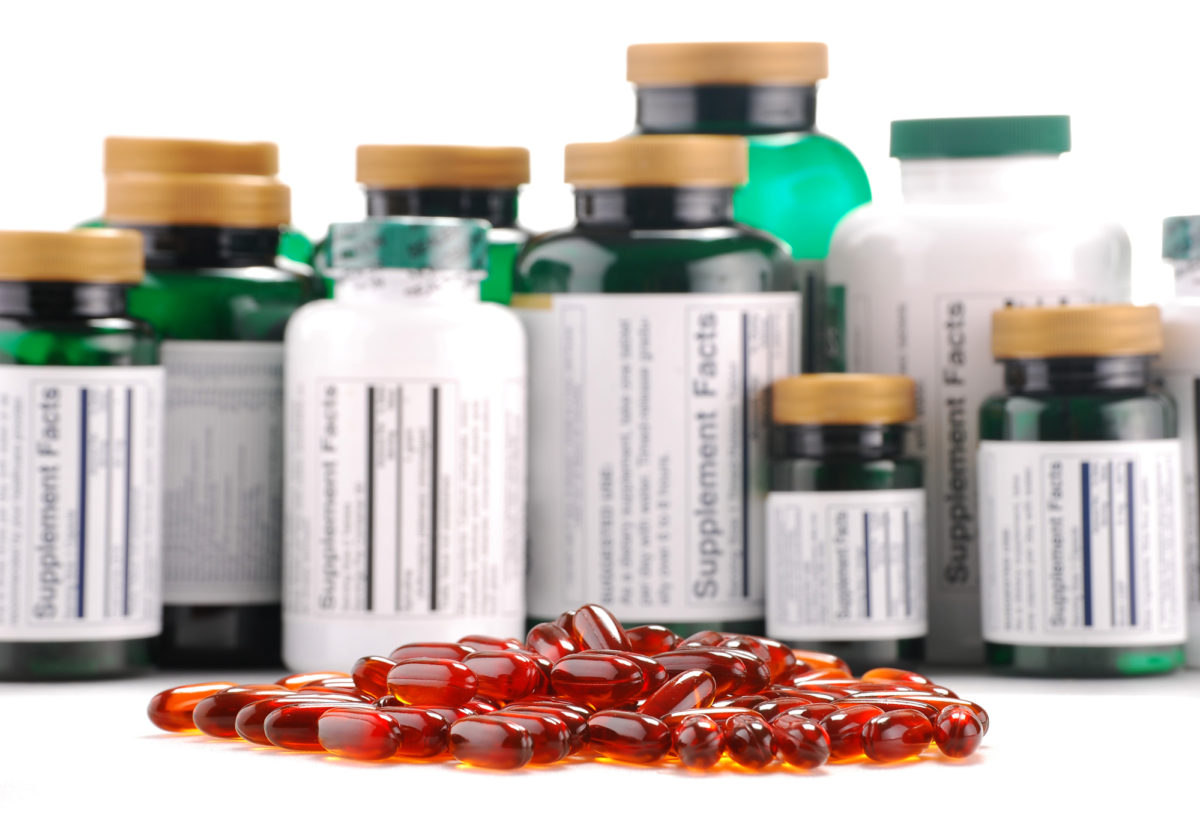
The commercialization of products classified as food supplements is very common in Mexico. But what kind of products are classified as food supplements? What is required to comply in order to market them?

First, in Mexico, the General Health Law defines them as Products based on herbs, plant extracts, traditional foods, dehydrated fruits or fruit extracts, with or without added vitamins or minerals, that might be in a pharmaceutical dosage form; and the intention of use is to increase or supplement the total dietary intake, complement it  or to replace any of its components.

The Regulations on the Sanitary Control of Products and Services (RCSPyS) states that food supplements can be made from carbohydrates, proteins, amino acids, fat oils, metabolites, plants, herbs, algae, dehydrated traditional foods, or anything else defined by the Ministry of Health, and they might be sold isolated or as a combination, with or without added vitamins or minerals and its consumption might not result in a health risk.

It is very important to highlight that RCSPyS states that food supplements MUST NOT contain substances with recognized pharmaceutical action, or claim therapeutic, preventive, or rehabilitative properties. Not to the product itself, nor functional claims of its ingredients, that are exclusive for pharmaceutical products.

Contrary to pharmaceutical products or medical devices, food supplements do not require a Cofepris Marketing Authorization (Registration) to be marketedd in Mexico. Nevertheless, a Product notification must be filed. This must be carried out by the company that is going to market the product since this company will be the one responsible for the product in Mexico. This notification also includes the activities that will be performed on the product (manufacturing, distribution, commercialization).

The labelling of food supplements must comply with RCSPyS requirements for labelling of food supplements, which is very specific for this kind of products and they are NOT covered by any Mexican Official Standard (NOM) on labeling.

The manufacturers or distributors of food supplements may also submit to Cofepris a classification inquiry confirmation, to confirm  if a specific product is a food supplement or not.

To obtain the confirmation, the following must be submitted:

  • Qualitative and quantitative formula (if it is a plant, the scientific name).
  • Monograph for uncommon substances.
  • Directions and recommendations of use.
  • An original label sample and the information with which the product will be marketed, which must comply with RCSPyS requirements for the labelling of food supplements.

It is important to be awaare that Cofepris answer to the classification inquiry is NOT a product authorization, but it is required to request a food supplement advertising permit, and it is useful to avoid controversy while marketing the product.

Finally, it is important to consider that supplements labelling must not include information that may mislead, exaggerate, or deceive about a product’s composition, origin, effects, or any other property. It cannot claim that the product is useful to prevent or cure any discomfort, ailment, or desease. According to the Mexican regulation, a food supplement can only be used to increase or complement the total dietary intake or to replace any of its components.

On the other hand, as consumers, we must keep an eye on commercialized products and be aware of what we consume. In case of finding a product claiming properties not matching those of food supplements or not complying with what has been mentioned above, an individual, or a legal entity may fil an online report before the Health authorities at https://www.gob.mx/cofepris/acciones-y-programas/denuncias-sanitarias.

Should you need help with a food supplement, do not hesitate to contact us and we will be glad to help.